How Much Is My Dallas House Worth? The Ultimate Free Home Valuation Guide for 2026

Updated: Feb 27

If you own a home in Dallas and you have been thinking about selling, the very first question on your mind is almost certainly this: what is my house actually worth right now? It sounds like it should be a simple question, but in the 2026 Dallas-Fort Worth market, the answer depends on who you ask, what method they use, and what your goals are as a seller.
The Dallas housing market has shifted significantly over the past two years. Inventory levels have climbed by nearly 40 percent, the median home price has settled around $420,000, and the average home is sitting on the market for over 60 days before going under contract.
For sellers, that means pricing your home accurately from day one has never been more important. Overprice by even five percent and you risk watching your listing go stale while carrying mortgage payments, property taxes, and maintenance costs month after month.
This guide walks you through the most common ways Dallas homeowners get a home valuation, explains what each method actually measures, details how to enhance your home's value, and helps you understand which one gives you the most useful number based on your situation.
The Three Main Ways to Find Out What Your Dallas House Is Worth
Not all valuations are created equal. Each method below serves a different purpose, and understanding the differences will save you from making costly pricing mistakes.
1. Online Home Value Estimates (AVMs)
The fastest way to get a ballpark number is to type your address into an online Automated Valuation Model (AVM). Major real estate portals all have their own versions:
Zillow: Zestimate
Redfin: Redfin Estimate
Realtor.com: RealEstimate™
Trulia: Trulia Estimate
HomeGain: Home Valuator
These tools are convenient, but they come with serious limitations that Dallas homeowners need to understand.
Automated models cannot see inside your home. They do not know whether you have an updated kitchen with quartz countertops, a leaking roof, or foundation settling caused by the expansive clay soil that is common across North Texas.
They also struggle with neighborhoods where homes vary widely in condition and upgrades, which describes a large portion of Dallas.
According to Zillow’s own accuracy data, the median error rate on their Zestimate for off-market homes nationally is around 7.5 percent. On a $420,000 Dallas home, that is a potential swing of more than $31,500 in either direction.
The Texas Comptroller’s Property Tax Assistance Division also notes that county appraisal district valuations, which feed into these online tools, are designed for tax purposes, not market pricing.
How to Use Online Tools Effectively:
Compare different sources: Since various websites might give you slightly different numbers, checking out more than one can give you a better picture.
Think locally: Remember, those online estimates often look at big-picture data and might not catch everything unique about where you live. Think about what makes your neighborhood special, any cool features nearby, and prices of homes recently sold close by.
Consult a professional: Talk with a real estate agent or appraiser. They're in the know about what's happening in the market and can help make sense of what online calculators tell you.
Online estimates are useful as a starting point, but they should never be the number you use to make a selling decision. Think of them as a rough compass heading, not a GPS coordinate.
2. Comparative Market Analysis (CMA) from a Real Estate Agent
A Comparative Market Analysis is what most real estate agents provide when they are trying to earn your listing. The agent looks at recently sold homes in your area that are similar to yours in size, age, condition, and features. They adjust for differences—an extra bedroom here, a smaller lot there—and arrive at a suggested listing price.
A good CMA from an agent who knows your specific Dallas neighborhood can be quite accurate. The challenge is that a CMA is designed to help you list your home on the open market, which means it assumes you are willing to invest in preparation: professional photography, staging, minor repairs, and potentially weeks or months of showings.
For homeowners in Oak Cliff, Lake Highlands, or East Dallas, a CMA can be especially valuable because these neighborhoods have seen varied price movement in 2026. The downside of relying solely on a CMA is that it represents what your house might sell for in a best-case scenario on the open market. It does not account for the time value of your money, the cost of carrying the property during the listing period, or the risk that your deal falls through due to buyer financing issues.
3. Professional Appraisal
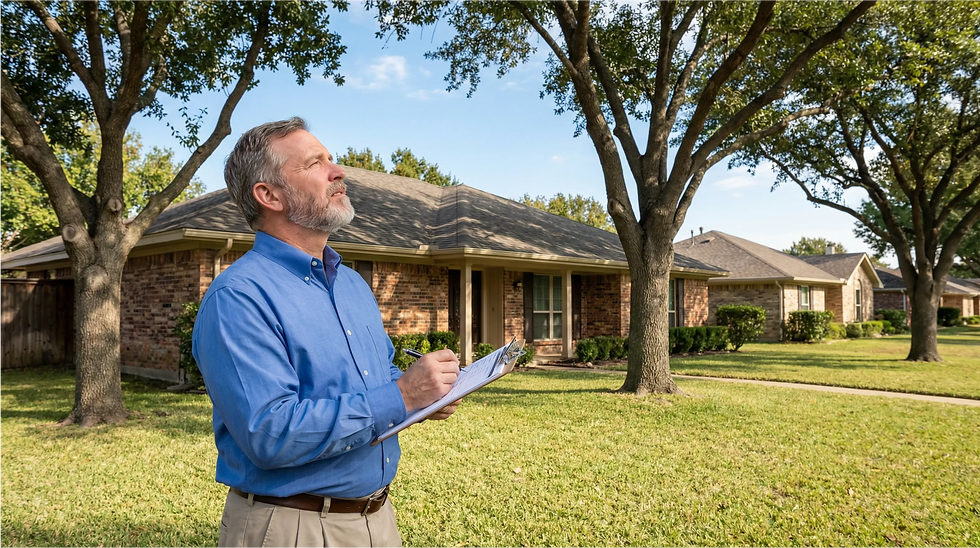
This is the most accurate, in-depth valuation you can get. When you hire a professional appraiser, they will conduct a thorough inspection of your property, both inside and out. They will measure the square footage, assess the condition of the home, and note any upgrades or unique features.
What to Expect from an Appraiser:
Impartiality: Their job is not to take sides but to provide an unbiased, factual assessment of value.
Detailed Inspection: They will look at everything from the foundation to the roof and all points in between.
Comprehensive Report: After the inspection, the appraiser will provide a detailed report that breaks down every factor affecting your home's value, including comparable sales and market analysis.
4. Investor Valuation (After Repair Value Method)
Professional cash home buyers like Ninebird Properties use a different approach called the After Repair Value (ARV) method. This is the valuation framework that real estate investors across Dallas-Fort Worth rely on, and it is built around four clear steps:
determining what your home would be worth after full renovation
2. estimating the cost of those renovations
calculating the holding and selling costs the investor will incur
arriving at a cash offer that accounts for all of those factors
The ARV method might produce a lower number than a CMA, but it reflects a fundamentally different transaction. You are receiving a guaranteed cash offer, skipping repairs entirely, and choosing your own closing date.
For many Dallas sellers, especially those dealing with properties that need significant work, the net proceeds from a cash sale can actually be comparable to a traditional sale once you subtract agent commissions, repair costs, staging expenses, and months of carrying costs.
What Is Driving Dallas Home Values in 2026?

Understanding the broader market context helps you evaluate any valuation you receive. Several factors are shaping what Dallas homes are worth right now.
Inventory is up sharply: The Dallas-Fort Worth metroplex has seen one of the largest increases in active listings of any major metro in the country, with supply rising nearly 40 percent year over year. This shift has moved the market firmly in favor of buyers, giving them more negotiating power.
Price corrections are underway: While the overall median home price in Dallas sits around $420,000, certain market segments have seen prices decline. Homes that were priced aggressively during the pandemic boom are now being re-evaluated.
Days on market have increased: The average Dallas-Fort Worth home is now spending over 60 days on the market before receiving an accepted offer.
Interest rates remain elevated: While mortgage rates have come down slightly from their peaks, they are still high enough to limit the pool of qualified buyers.
Enhancing Your Dallas Home's Value Before Selling
Boosting your home's value doesn't always require a complete overhaul. Strategic improvements can make a significant difference.
Quick Fixes to Boost Home Value
Curb Appeal: First impressions count. Simple fixes like mowing the lawn, trimming bushes, adding fresh mulch, and painting the front door can dramatically improve how your home is perceived.
Fresh Paint: A neutral coat of paint inside can make spaces feel larger, brighter, and cleaner.
Minor Repairs: Fix leaky faucets, replace broken tiles, and repair any other small issues that could give buyers a negative impression.
Declutter and Deep Clean: This is one of the most effective and least expensive ways to make your home more appealing.
Long-Term Investments for Home Improvement
Kitchen and Bathroom Remodels: These are consistently the renovations that provide the best return on investment. Even minor updates like new countertops, fixtures, or appliances can add significant value.
Energy Efficiency: In Texas, energy-efficient upgrades like new windows, added insulation, or a high-efficiency HVAC system are highly valued and can lower utility bills for the new owner.
Adding Living Space: Finishing a basement, converting an attic, or adding a deck or patio can increase your home's functional square footage and appeal.
What To Do If You’re Not Happy With Your Home’s Valuation
If you receive an appraisal or valuation that is lower than you expected, you have options:
1.Review the Report: Look for any errors in the data, such as incorrect square footage or a missed bedroom.
2.Appeal the Appraisal: You can formally challenge the appraisal by providing new data or pointing out errors.
3.Make Improvements: Use the valuation report as a guide to make strategic improvements that will increase your home's worth.
4.Get a Second Opinion: Hire another appraiser or ask a different real estate agent for a CMA.
5.Consider a Cash Offer: If you need to sell quickly and the required repairs are too extensive, a cash offer from an investor might be your best route to a fast, hassle-free sale.
The Bottom Line
Your Dallas home is worth what a qualified, motivated buyer is willing to pay for it, and in 2026, that number depends heavily on your selling method, your timeline, and the condition of your property.
Online estimates give you a starting point. A CMA gives you a listing strategy. A professional appraisal gives you a defensible number. And an investor valuation gives you a guaranteed number you can take to the bank.
Whatever path you choose, the most important thing is to base your decision on accurate, current data rather than assumptions about what the market was doing two years ago.
The Dallas market has changed, and sellers who adapt to the new reality are the ones who come out ahead.
Frequently Asked Questions
How often should I get my home appraised?
It's a good idea to have an expert value your house every couple of years, or if there’s a big shake-up in the market or something major happens with your property. Talking to a real estate agent can help figure out when it might be the right time.
Can home improvements significantly increase the value of my home?
Yes. By focusing on updates that improve curb appeal, enhance functionality (especially in kitchens and bathrooms), and follow current design trends, you're likely to attract more buyers and get a better price.
What factors can negatively affect my home's value?
Besides a general market downturn, factors like deferred maintenance, an undesirable location (e.g., next to a busy road), outdated finishes, or significant structural issues like foundation problems can negatively impact value.
How does the local Dallas real estate market influence my home's worth?
The value of your house is heavily influenced by local supply and demand. Factors like job growth in the DFW area, the number of homes for sale in your specific neighborhood, and school district ratings all play a big part in setting your home's worth.